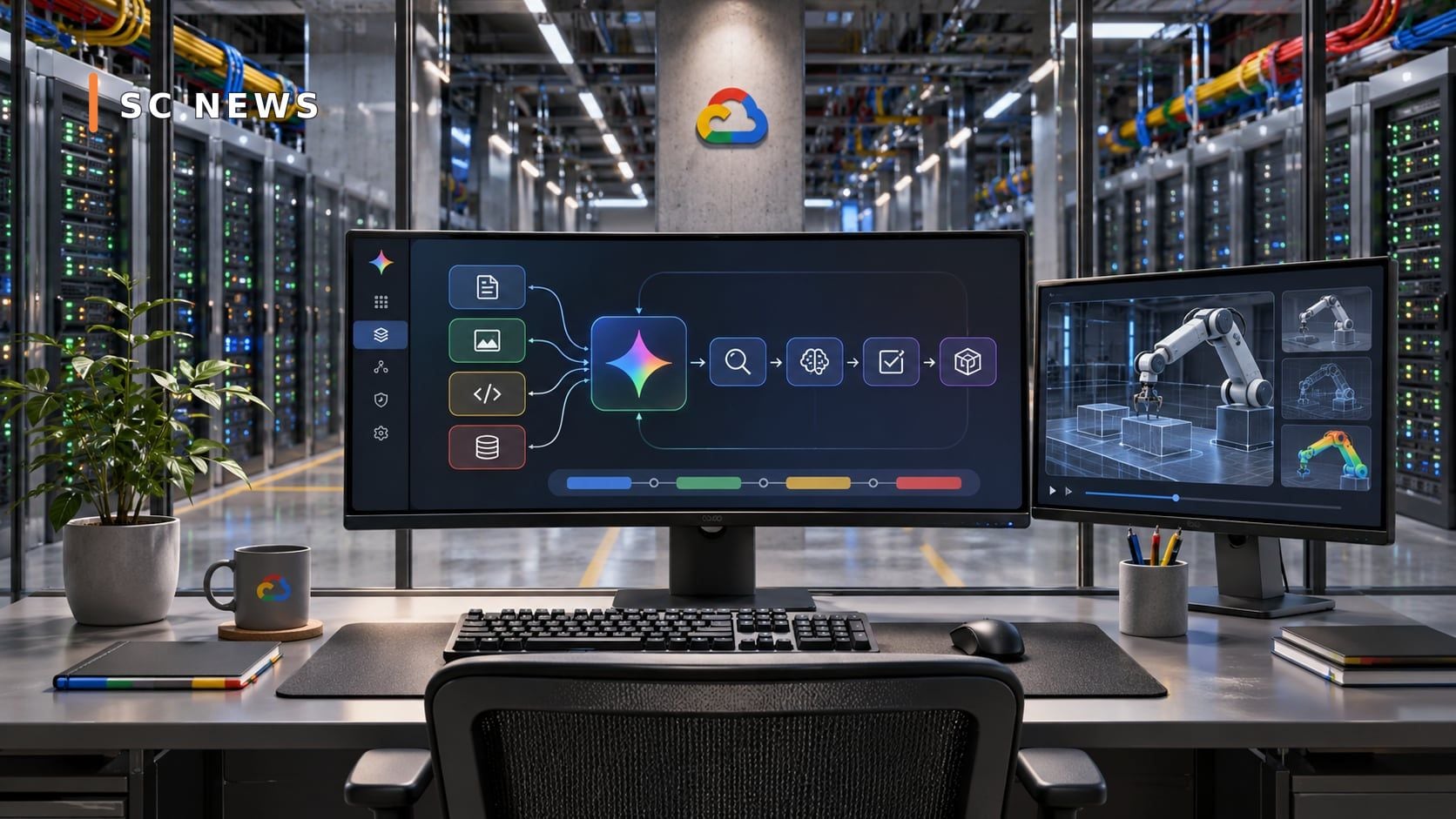
Yesterday, Monday, November 2, Google published a formal review of the most prominent developments in artificial intelligence that it announced during October 2026, revealing a new phase of competition based on the development of models more capable of carrying out complex tasks, and expanding their applications in institutions and services cloud, along with enhanced protection and verification tools for artificial content.
The review topped the Gemini 4 Carbon model, presented by Google as its most powerful model to date, shortly after the launch of the Gemini 4 Argon. This sequence reflects the acceleration of the model development cycle within the company, with the transition of Its interest is from improving the performance of smart aids to building systems capable of handling long-term projects and specialized tasks.
blog.google+1
Gemini 4 Carbon Enters Specialized Testing
The Gemini 4 Carbon is one of the most prominent Google ads of the recent period, especially in the fields of security Cyber and complex software engineering. According to the company, the model has advanced capabilities in dealing with extended tasks that require retaining the context and implementing multiple steps.
But Google hasn't made it publicly available to all users. It has confirmed that Carbon is undergoing tests Initial with U.S. government agencies and a select group of trusted cyber defense professionals, in actions aimed at assessing its capabilities and safety controls before expanding access to it.
In contrast, the Gemini 4 Argon is already available across a range of the company's services, including the app Gemini, programming interfaces, developer platforms, and Google Cloud, with a focus on complex document analysis, software development, and financial and legal tasks.
The difference between the two stages of making the models available reveals Google's tendency to separate the capabilities available for general commercial use from those that call for additional security assessments.
Google Cloud expands competition among AI models
In a separate announcement also published on November 2, Google Cloud showcased its expansion in providing AI models from different companies.
The company explained that it offers through its corporate platform options that include Google Forms, OpenAI, Anthropic, plus over 200 templates from a variety of sources.
Developments included the option to run Claude templates managed by Anthropic on Google Cloud, as well as the continuation of the management option by Google, giving organizations greater flexibility when deciding how to run templates and manage its technical architecture.
Google Cloud also announced support for Claude Opus 5.5 and Claude Sonnet 5.5 models within the Google Antigravity environment, in a move aimed at developers who need multiple tools for programming, building applications, and performing programming tasks.
This approach has clear commercial importance; competition is no longer Cloud is limited to having the most powerful model, but includes the ability of the platform to provide multiple options within a unified management, security and governance environment.
Google Cloud Blog
Genie 4 expands the use of AI in simulation
The review also included the Genie 4 model, developed by Google DeepMind to create Interactive environments that the user can direct using natural language.
According to the company, the model supports real-time scene simulation with motion and sound effects, opening up scope for developing testing and training environments for artificial intelligence systems and robotics.
It doesn't mean that That the technology has become a complete alternative to game engines or professional simulation platforms; It is still in the framework of research and development. But the ability to generate an interactive environment and respond to instructions as it runs represents a different direction from traditional image and video production tools.
What do these developments mean for users and businesses?
For developers, Google is moving to provide an environment that combines intelligent forms, programming tools, and cloud architecture, which may reduce the need to build separate systems for each provider.
As for institutions, the importance of comparing models increases Depending on the accuracy, cost, speed, security policies and nature of the data used.
The decisive factor during the next stage remains the extent to which companies are able to transform these capabilities into stable services that can be relied upon in real business environments.
What's next?
Waiting for the market Broader details on the future availability of Gemini 4 Carbon, associated security testing results, and the continued expansion of Google Cloud services to support additional models and tools.
The October announcements, collected by Google in its review released on November 2, indicate that the company is betting on... An integrated ecosystem of models, applications and cloud services, rather than focusing on a single product.