YouTube has included new clarifications regarding disclosure of the use of generative AI in music content in its November 2026 policy updates, after it began rolling out custom labels on October 14 for music clips in which AI was instrumental in producing it.
And targeted The new rules include artists, production companies and partners responsible for delivering music content to the platform, so that the nature of AI's contribution can be distinguished when submitting and publishing works.
These measures come at a time when it has become possible to produce melodies and arrangements And vocal sounds using generative models, which makes determining how music is produced an issue of transparency and content data.
YouTube Help+1
What's new in YouTube Music policy?
YouTube's official policies page states that artists and music labels are required By disclosing the use of artificial intelligence in the works they upload or submit to the platform.
According to the technical assistance documentation, music partners can classify content according to three main statuses.
The first status is Fully Gen AI, which means that the work was produced entirely using intelligence Obstetric artificial.
The second case is Partly Gen AI, which is used when artificial intelligence has a role in part of the production process, while other parts are created by human means.
The third status, No Gen AI, indicates that there is no AI-generated content within the work.
These classifications help reduce ambiguity that can arise when AI tools are used in different ways within a single music production.
YouTube Help
What is the difference between full generation and partial generation?
YouTube provides practical examples that help partners understand the difference.
When he writes Someone who gives a textual description of a music generator and produces a complete song from it, with melody and vocal performance, falls into the category of full generation.
When an artist uses artificial intelligence to produce a specific layer of music, and then records the vocals or the rest of the instruments himself, the work can be classified Include content where AI was partially used.
Examples of partial use also include using a generative tool to formulate parts of lyrics or developing melodies, or creating music video images using video generation tools.
On the other hand, the platform explains that some Usual audio processing techniques, such as simple pitch correction or automated voice enhancement tools, do not necessarily categorize the work as AI-generated.
This distinction is important because the use of digital software in recording and editing is not automatically synonymous To use generative artificial intelligence.
How do production companies provide disclosure statements?
YouTube offers different ways to present information depending on how you manage your music content.
Partners that rely on music data delivery systems may include disclosure information in DDEX data supported.
Partners using CSV files can also submit their AI use case within custom fields in content delivery templates.
As for those who upload content via YouTube Studio, they can use the appropriate disclosure options within the content properties wherever they are Available.
The documents indicate that the platform may use additional signals to determine the nature of the content, even when the partner does not provide sufficient data about it.
This does not mean that all automated classifications will always be correct; The results depend on the accuracy of the data and the monitoring mechanisms used.
YouTube Help
What does the listener see inside YouTube Music?
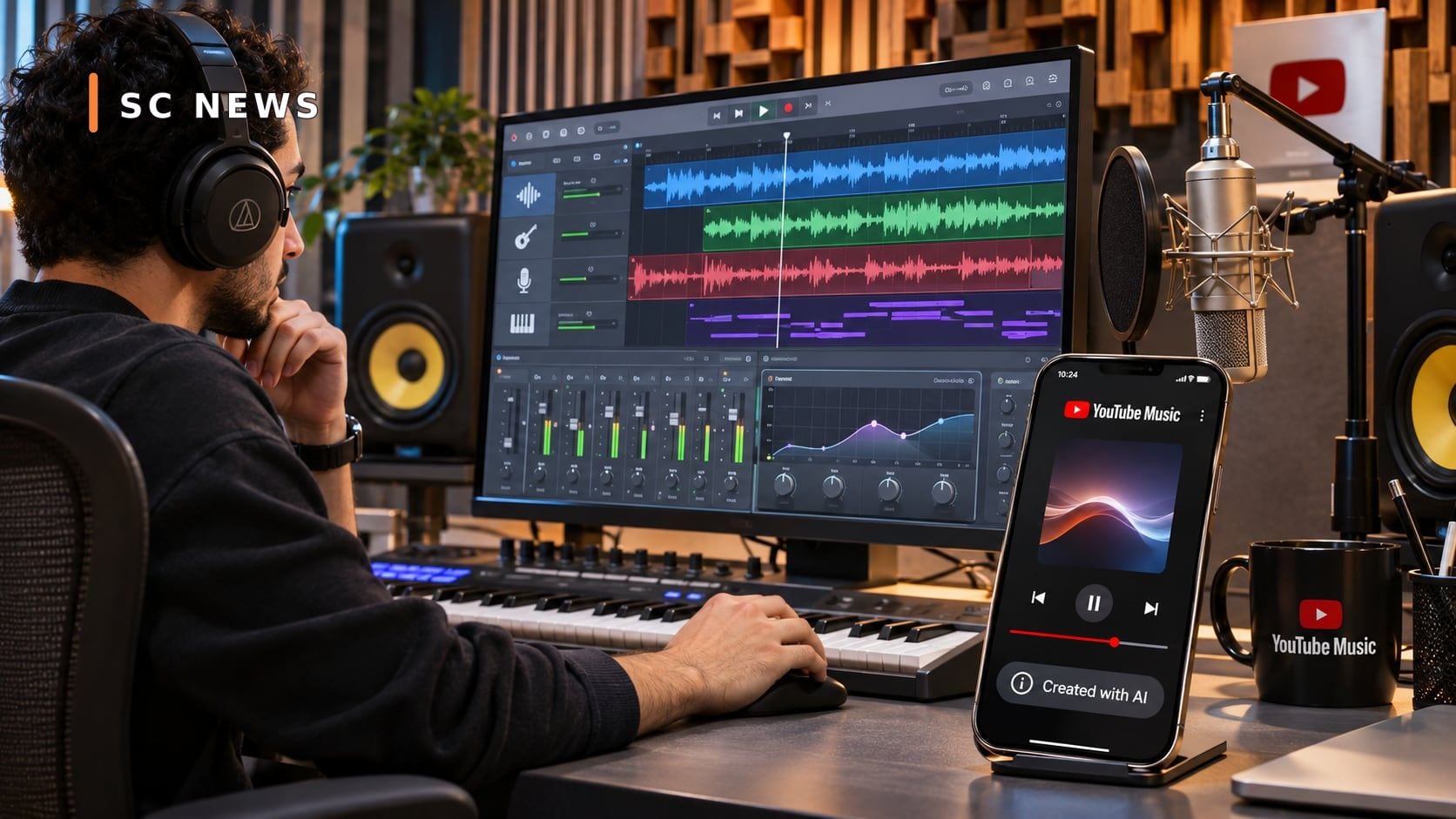
YouTube announced on October 14, 2026 that it would begin rolling out tags for music clips produced primarily using artificial intelligence.
The tag appears on the music clip playback page, and the user can click on it to obtain additional information.
The platform said it is working with music partners and using its own monitoring tools to help identify clips that require this information to be shown.
It also indicated its intention to expand the display of tags to the main YouTube app.
It is important to distinguish chronologically between the two events: the offering of signs began In October, the clarification of disclosure requirements included in the Policy Log is from the November 2026 update. The Policy Log page did not specify a specific day in November to publish that clarification.
blog.youtube
The impact of the rules on artists and production companies
The new system adds regulatory responsibility to Parties that publish music via the platform.
An independent artist or production company that uses generative tools needs to document the nature of their use in a way that allows a correct classification of the work to be provided.
This data may become part of your normal workflow, along with copyright information Participating artists, album and recording data.
Having separate classifications for full and partial generation also helps avoid putting all work that has used any smart tool into one category.
But these classifications do not alone resolve issues of rights ownership or the legality of using votes Artists or protected materials, matters that may require independent legal evaluation.
Do tags affect the reach of songs?
It is not accurate to assume that adding a label stating the use of AI automatically means that the work will be banned, reduced or monetized.
I made it clear YouTube has previously stated that, in the context of its general policy for modified or authentically generated content, the appearance of a disclosure mark alone does not determine whether content is monetized or recommended.
However, music remains subject to the rest of the relevant rules, including copyright requirements Partners and digital asset management.
YouTube Community
What does that mean for listeners?
The appearance of labels gives the audience a better chance of knowing whether the musical work it hears was produced with a significant generative contribution.
This clarification may help enhance confidence in published business data. Without imposing on the listener a prior judgment on its artistic quality.
The stated purpose of labels is to provide clearer information about the production method, not to classify generated music as technically good or bad.
What's next?
The success of the policy will be tied to YouTube's ability to Expanding the application of accurate labels, providing easy tools to partners, and addressing cases where disclosure data differs from automated detection results.
The development of tags within the main YouTube app is also worth keeping an eye on, given the size of the music listening audience And watches music videos outside of YouTube Music.