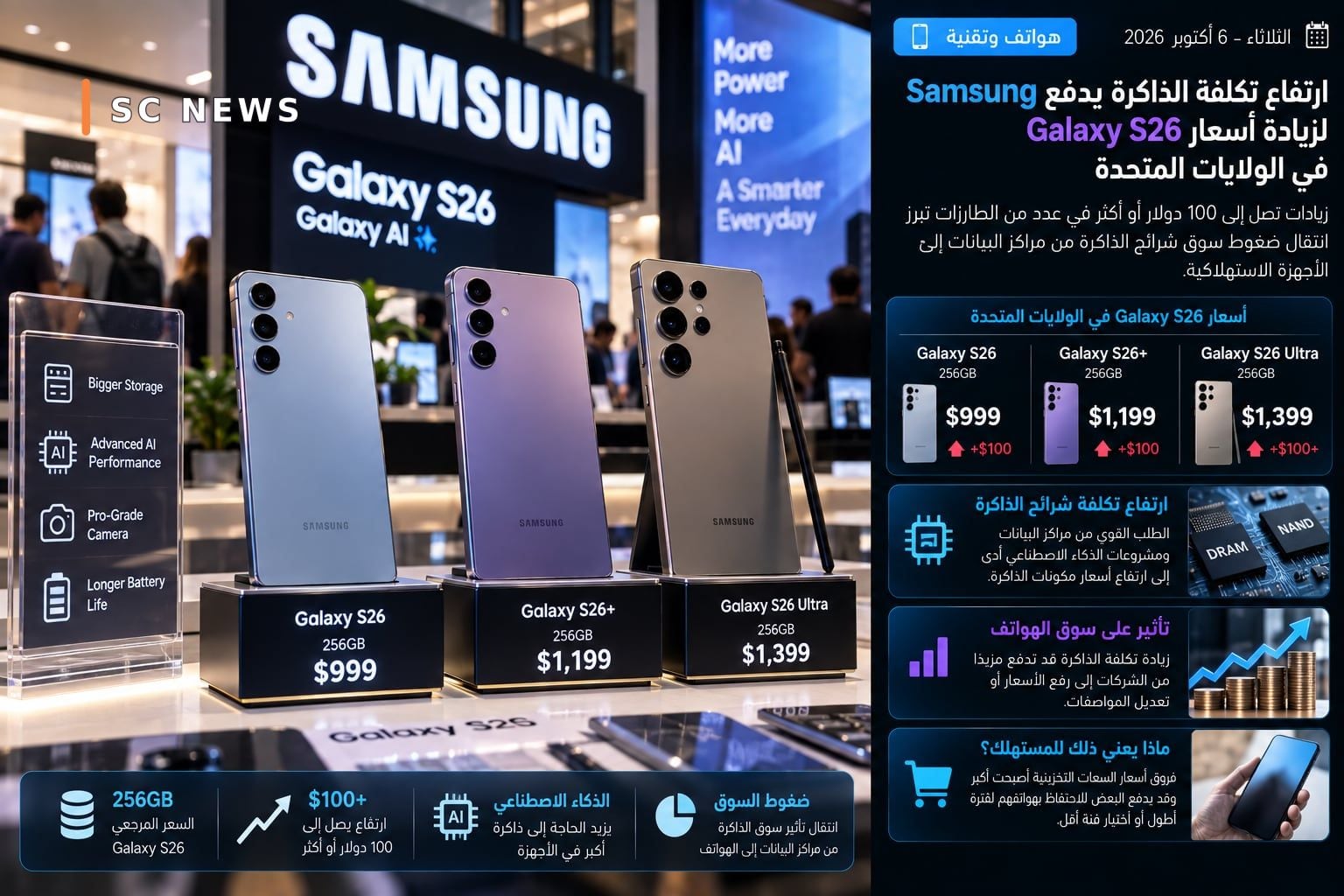
Samsung has raised the prices of a number of Galaxy S26 series phones in the American market, in a development that reflects the increasing pressures imposed by the cost of memory chips on the consumer electronics sector.
On October 1, Reuters quoted Yonhap Agency that the company raised the prices of Galaxy S26 devices against the backdrop of a rise Costs of memory chips, components that have become a major focus in the semiconductor market as AI infrastructure booms.
According to The Verge, the price of a number of Galaxy S26 models in the United States has increased by $100 or more. The reference price for the Galaxy S26 reached 256 GB to approximately $999, while the 256GB Galaxy S26 Ultra starts at approximately $1,399 according to the reference prices shown.
At the same time, some Samsung pages show instant offers or discounts that differ from the reference price, so a distinction must be made between the List Price and the temporary purchase price. During promotional campaigns.
The big deal isn't just about one phone. Memory markets are going through a period of change due to the huge demand from data centers and artificial intelligence projects for advanced types of memory, which affects the production and capacity allocation decisions of manufacturers.
Reuters In another report on the memory sector, she pointed to the strength of demand associated with artificial intelligence and continued supply pressures, a context that helps explain the high importance of the cost of memory for companies that make phones, computers and other devices.
A modern phone needs memory Greater operation and storage than previous generations, especially with the expansion of artificial intelligence functions that operate locally on the device, and the increase in imaging quality and the size of applications and files.
When prices for these components rise, companies have a limited number of options: Bear part of the cost Reducing the margin, modifying the device specifications, or passing part of the increase to the consumer.
In the case of the Galaxy S26, the current increases indicate that Samsung has chosen to adjust prices in the US market for a number of configurations rather than absorb all the pressure.
This development will be important to monitor for the rest of the market Phones. There is no rule that says all companies will follow Samsung in the same proportion, because each manufacturer has different supply contracts, inventory and product lineup, but the continued rise of memory components could affect the pricing decisions of more than one company.
The consumer in turn may become more sensitive to differences Amplitudes. Going from 256GB to 512GB or 1TB becomes more expensive when the memory itself is an inflationary item, and may push some buyers to keep their phones longer or opt for a lower tier.
From a corporate perspective, the problem comes at a time when brands are trying Commercial marketing of greater artificial intelligence capabilities within phones. These capabilities require more powerful hardware and more memory in many cases, making the cost of components a direct part of the economics of the “AI phone.”