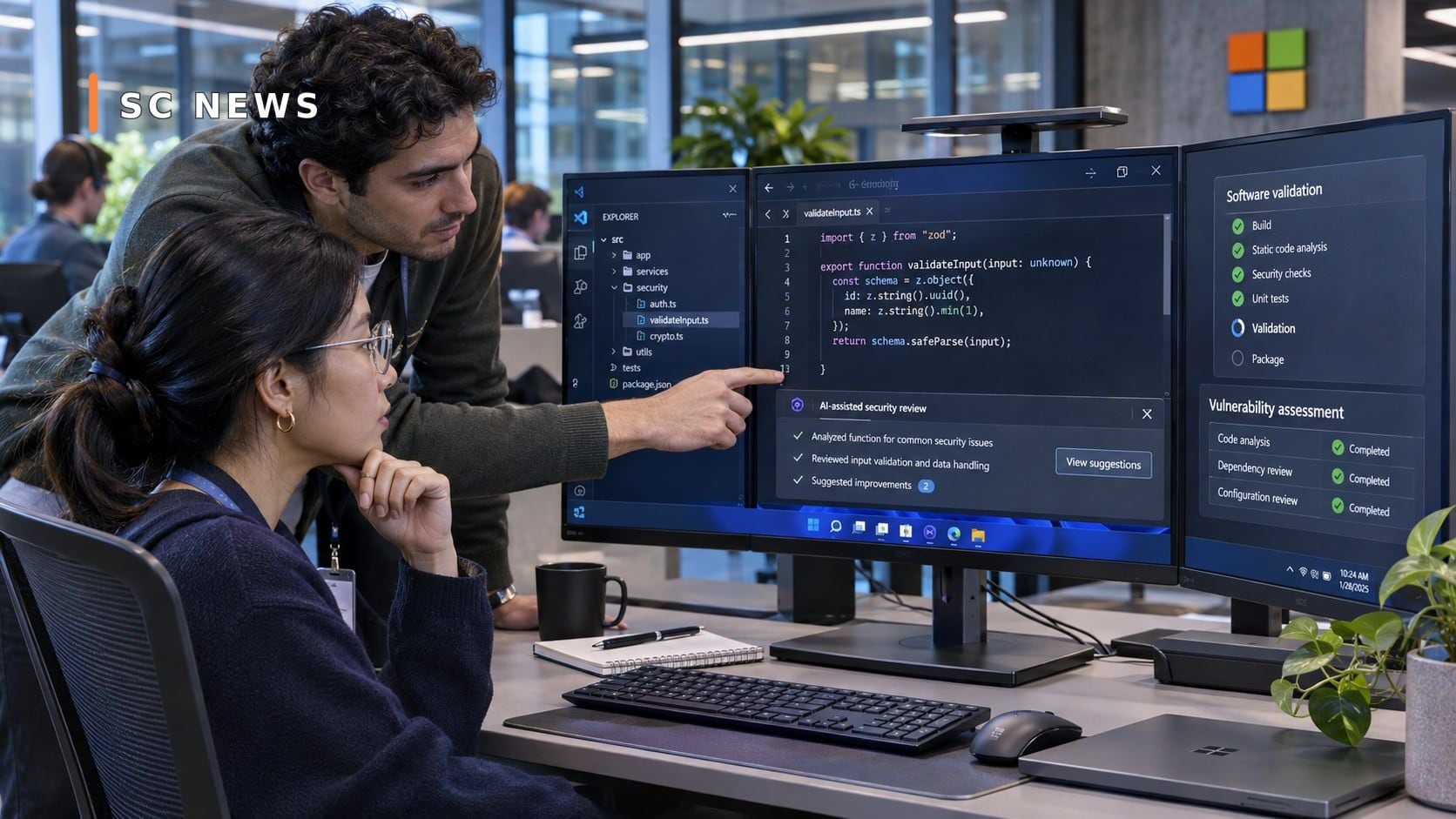
Microsoft revealed a new approach to managing security vulnerabilities in the Windows system, which is based on employing artificial intelligence models to discover and analyze software problems and help develop fixes, with final decisions still subject to review by specialized engineers.
And in a technical statement Published by the company on November 5, 2026, it explained that the October Windows security update addressed more than 1,100 vulnerabilities registered within the international CVE classification system. Microsoft considers this number an indication of the expansion of vulnerability research and remediation, and not evidence alone of a decline in system security.
Windows Experience Blog
How does Microsoft use artificial intelligence?
The new trend relies on introducing artificial intelligence techniques into multiple stages of the vulnerability treatment cycle, starting from discovering it within the code, through evaluating its impact, all the way to testing and publishing the patch.
Among the tools The company highlighted the MDASH system, which is a code analysis tool that relies on several specialized artificial intelligence models and agents. Its function is to identify areas of suspicion and verify the initial results, before specialists review them and take appropriate action.
And do not be limited Applications advertised on vulnerability scanning; Microsoft uses automated help to identify affected versions of Windows, looks for similar issues in other parts of the code, and prepares security and compatibility tests that help make sure the fix doesn't cause new crashes.
The company emphasizes that these tools do not replace human engineering responsibility, but rather help teams deal with a larger volume of analyzes in less time.
More than 1,100 vulnerabilities in one update
The number announced by Microsoft for the October 2026 update is one of the most notable details in the statement.
but Reading the number requires a distinction between the number of vulnerabilities that could be detected and addressed and the actual level of risk facing each user. Not all vulnerabilities are equally dangerous, and exploitation of some may require special permissions or specific circumstances.
Also, the total number does not mean that All vulnerabilities have been exploited, and it is not proven that attackers succeeded in using them.
On the other hand, the use of artificial intelligence in code analysis does not benefit defense companies alone. The same tools may help attackers scan published updates and find out how Exploiting systems that have not yet applied patches.
This is why Microsoft believes that the period between update release and installation has become an essential part of the level of protection.
Updates are not just a routine step
The company emphasizes that discovering and fixing the vulnerability does not eliminate the problem if the devices remain At risk due to delayed update installation.
It calls on organizations to prioritize devices most vulnerable to attacks, such as systems connected directly to the Internet and infrastructure associated with managing sensitive identities and accounts.
Organizations in this area benefit from tools such as Windows Autopatch and Microsoft Intune, along with Hotpatch capabilities in eligible environments, reduce delays in deploying fixes.
Microsoft also makes vulnerability data available in machine-readable formats, including CSAF and VEX, so security teams can input information directly into monitoring and evaluation systems.
Windows Experience Blog
What does this mean for businesses and Windows users?
For the average user, the announcement does not change basic security steps: installing reliable updates, not disabling security systems unnecessarily, and keeping backups of important data.
As for companies, they face a challenge More complicated. A security update requires compatibility testing with internal applications, while long delays may leave devices vulnerable to vulnerabilities whose details are now known.
Microsoft is trying to address this equation by improving testing before releasing a patch, and then following up Performing the update after it is deployed, and providing mechanisms to deal with problems that may arise during installation.
What's next?
AI is expected to continue to be integrated into vulnerability detection and maintenance within Windows, in parallel with the development of update deployment and monitoring tools.
It will be the standard What is practical for the success of this approach is to reduce the period during which devices remain unprotected, while maintaining the stability of the system and its compatibility with applications.